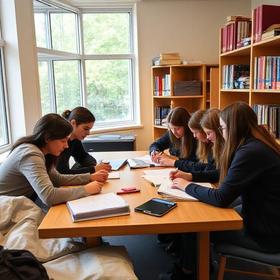
Independent study and research opportunities at boarding schools give motivated students a chance to move beyond standard coursework and pursue serious academic questions with faculty guidance. For students who are curious, self-directed, and ready for deeper learning, these programs can become one of the most valuable parts of the boarding school experience.
Because boarding schools combine academic life, residential life, and close faculty mentorship, they are often well positioned to support long-term research projects. Students may investigate a scientific problem, write a literary analysis, design an engineering prototype, study public policy, or complete a senior capstone project that reflects college-level expectations.
For families comparing schools, these opportunities can reveal a great deal about academic culture. A strong independent study program suggests that a school values curiosity, initiative, and disciplined inquiry.
Why Independent Study Matters at Boarding Schools
Personalized Academic Exploration
Traditional courses provide structure and essential knowledge. Independent study allows students to go further. A student interested in marine biology, constitutional law, artificial intelligence, architecture, or creative writing may not always find a standard course that fully matches that interest.
Through independent study, students can work with a faculty advisor to design a focused academic plan. This usually includes readings, research goals, regular meetings, written work, and a final product.
Families new to residential education may find useful context in Why Consider Boarding School?, which explains how boarding schools support academic and personal growth within a structured community.
Faculty Mentorship
One of the strongest advantages of