School Life

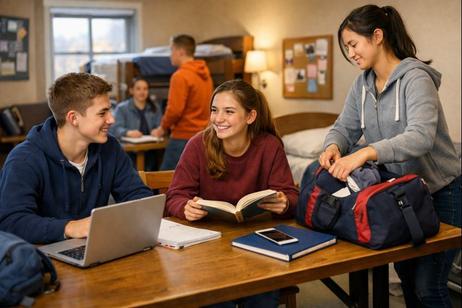
For boarding school students, the campus is home. Explore dormitory living, get expert advice on learning and living away from home and learn more about what can be done to help your child transition to and succeed in boarding school.

View the most popular articles in School Life:

The Dorm Parent Interview: 15 Questions Families Should Ask

Updated
|
The Dorm Parent Interview: 15 Questions Families Should Ask
Discover 15 important questions to ask dorm parents before choosing a boarding school and learn how residential life shapes the student experience.

When families tour boarding schools, they often focus on academics, college placement, athletic facilities, and campus aesthetics. Those factors certainly matter. However, one of the most influential people in a boarding student's daily life is often someone parents spend only a few minutes with during the admissions process: the dorm parent.

Dorm parents occupy a unique role within the boarding school experience. They serve as mentors, supervisors, advisors, problem-solvers, and trusted adults who help students navigate the challenges of living away from home. While teachers may see students for an hour each day, dorm parents often witness how students manage friendships, stress, independence, and personal growth outside the classroom.

The quality of a boarding school's residential life program can significantly shape a student's experience. Yet many families leave campus visits without asking the questions that reveal what dorm life is actually like.

If you're evaluating boarding schools, consider using these questions to gain a deeper understanding of the residential environment your child may soon call home.

Why Dorm Parents Matter More Than Many Families Realize

One of the defining characteristics of boarding school is that education extends beyond the classroom. As we discuss in our article on why boarding school remains a unique educational experience, students learn independence, responsibility, time management, and interpersonal skills through daily life in a residential community.

Dorm parents play a central role in that process.

At most schools, dorm parents live in or adjacent to student residences and interact with students


. . .read more

Safety in Boarding Schools: 2026 Guide for Parents

Updated
|
Safety in Boarding Schools: 2026 Guide for Parents
Explore how boarding schools approach student safety in 2026, from campus security and mental health support to bullying prevention and wellness policies.

For families considering residential education, safety in boarding schools remains one of the most important factors in the decision-making process. Parents want reassurance that their children will live in a secure, supportive environment where academic growth is balanced with physical safety, emotional well-being, and responsible supervision.

In 2026, boarding schools are approaching student safety with far greater sophistication than in previous decades. Modern campuses now integrate advanced security systems, mental health services, structured residential oversight, and comprehensive student wellness policies. At the same time, families are asking more detailed questions about bullying prevention, digital safety, emergency preparedness, and staff accountability.

While no educational environment is entirely risk-free, many boarding schools have invested heavily in creating safer and more transparent communities. Understanding how these systems work can help parents evaluate schools more effectively and identify programs that prioritize student well-being.

How Boarding Schools Define Student Safety Today

Safety in boarding schools now extends far beyond locked dormitories and curfews. Leading schools increasingly take a holistic approach that includes:

  • Physical campus security
  • Student mental health support
  • Bullying and harassment prevention
  • Cybersecurity and digital citizenship
  • Medical and emergency preparedness
  • Residential supervision
  • Staff training and accountability

The residential nature of boarding schools creates both additional responsibilities and unique advantages. Because students live on campus, faculty and residential staff interact with them throughout the day and evening, often allowing concerns to be identified earlier than in traditional day-school settings.

Families researching schools should look for evidence that safety practices are embedded into

. . .read more

AI in Boarding Schools: ChatGPT Use and School Policies

Updated
|
AI in Boarding Schools: ChatGPT Use and School Policies
How students use ChatGPT at boarding schools and what policies schools allow in 2026. A guide for parents and educators navigating AI in education.

Artificial intelligence is rapidly transforming education, and boarding schools are at the center of the conversation. As generative AI tools like ChatGPT become common study aids, educators are navigating a complex question: how should schools balance innovation with academic integrity?

For families exploring residential education, understanding AI in Boarding Schools: How Students Are Using ChatGPT and What Schools Allow has become increasingly important. From supervised AI use in research to strict guidelines for essays and exams, boarding schools across the United States are developing thoughtful policies that reflect both opportunity and caution.

This article examines how students are using AI, what most schools allow, and how boarding schools are shaping responsible use in 2026.

Why AI Is Becoming Common in Boarding Schools

Boarding schools often adopt emerging educational technologies earlier than many other institutions. Their immersive academic environments, smaller class sizes, and close faculty mentorship allow schools to experiment with new tools while maintaining strong oversight.

Generative AI tools like ChatGPT can assist students in several ways:

  • Brainstorming essay topics
  • Clarifying complex academic concepts
  • Summarizing research materials
  • Practicing foreign language conversations
  • Generating study guides or quiz questions

According to the National Center for Education Statistics, artificial intelligence and digital learning tools are becoming increasingly integrated into secondary education programs nationwide (nces.ed.gov).

For boarding schools, where students live and study on campus, faculty members can observe how AI tools affect learning in real time.

How Boarding School Students Are Using ChatGPT

In practice, most boarding school

. . .read more

Boarding School Mental Wellness After COVID: Best Practices

Updated
|
Boarding School Mental Wellness After COVID: Best Practices
How boarding schools are advancing mental wellness post-pandemic through innovation, prevention, and student-centered best practices in 2026.

Boarding School Mental Wellness Post-Pandemic: Innovations & Best Practices

The conversation around student well-being has permanently shifted. In 2026, Boarding School Mental Wellness Post-Pandemic: Innovations & Best Practices is no longer a niche topic but a defining measure of institutional quality. Families evaluating boarding schools are asking deeper questions about mental health infrastructure, prevention models, crisis response, and long-term resilience. Educators are responding with new systems that go far beyond what existed before 2020.

This article examines how Boarding School Mental Wellness Post-Pandemic: Innovations & Best Practices have evolved, what leading schools are doing differently, and which approaches are proving most effective for today’s students.

Why Mental Wellness Looks Different After the Pandemic

The pandemic accelerated mental health challenges among adolescents, including anxiety, depression, social disconnection, and academic burnout. According to the Centers for Disease Control and Prevention, rates of persistent feelings of sadness and hopelessness among teens rose sharply during and after COVID-19.

For boarding schools, where students live and learn on campus, these challenges were especially visible. As a result, Boarding School Mental Wellness Post-Pandemic: Innovations & Best Practices now emphasize proactive care rather than reactive intervention.

Key shifts include:

  • Treating mental wellness as a campus-wide responsibility

  • Embedding prevention into daily routines and residential life

  • Normalizing mental health conversations among students and faculty

Expanded Counseling Models on Boarding Campuses

. . .read more

Hybrid Boarding Models Explained for 2026

Updated
|
Hybrid Boarding Models Explained for 2026
Explore hybrid boarding models, including weekday-only, flex boarding, and modular residency, with 2026 insights for families.

Hybrid Boarding Models: Weekday-Only, Flex Boarding & Modular Residency

Boarding schools have long been associated with full-time residential life, Sunday night arrivals, and weekend traditions that span generations. In 2026, that image is evolving. A growing number of schools are adopting hybrid boarding models that combine the academic intensity and community benefits of boarding with the flexibility modern families expect.

Hybrid boarding models, including weekday-only boarding, flex boarding, and modular residency, are reshaping access to boarding education. These options reflect shifting family structures, expanded commuter populations, global mobility, and a renewed focus on student well-being. For many families, hybrid boarding models now offer a compelling middle ground between traditional boarding and day school enrollment.

This article examines how hybrid boarding models work, why schools are expanding these offerings, and what parents and students should consider when evaluating weekday-only boarding, flex boarding, and modular residency programs.

Why Hybrid Boarding Models Are Expanding in 2026

Several converging trends are driving the rise of hybrid boarding models.

First, families are seeking greater customization. Parents increasingly want educational options that align with work schedules, travel demands, and shared custody arrangements. Hybrid boarding models allow families to access boarding resources without committing to seven-day residency.

Second, schools are responding to enrollment diversification. According to the Association of Boarding Schools (TABS), interest in nontraditional boarding options has grown steadily since the pandemic, particularly among domestic students living within one to three hours of campus. Hybrid boarding

. . .read more

Recent Articles

How to Read a School's Strategic Plan Before You Apply
Learn how to evaluate a boarding school's strategic plan and uncover insights about leadership, finances, priorities, and long-term stability.
The Dorm Parent Interview: 15 Questions Families Should Ask
Discover 15 important questions to ask dorm parents before choosing a boarding school and learn how residential life shapes the student experience.
What Happens if a Boarding School Closes or Merges? Parent Guide
Learn how to prepare if a boarding school closes or merges, including transfer planning, financial considerations, and protecting your child's education.