About Boarding Schools

Here you’ll find basic information on boarding schools and why they may be the best choice for your child. Get answers to some of the most frequently asked questions, dispel boarding school myths, and learn what separates a boarding school from other private school options.

View the most popular articles in About Boarding Schools:

Boarding School Residential Life Models Explained

Updated
|
Explore boarding school residential life models, supervision, and mentorship systems shaping student growth and community living.

Boarding school residential life models play a central role in shaping the student experience, often defining how young people grow academically, socially, and personally. While families frequently focus on academics and college placement, the structure of residential life deserves equal attention. The way students live, interact, and receive guidance outside the classroom can significantly influence their independence, well-being, and long-term success.

At its core, a boarding school is not simply about where students sleep. It is an immersive environment where supervision structures and mentorship systems create a continuous learning experience. As highlighted in foundational discussions of boarding education, the residential setting itself becomes an extension of the classroom, fostering responsibility, resilience, and community engagement.

Understanding how different schools design their residential programs helps families make informed decisions and align expectations with their child’s needs.

What Are Boarding School Residential Life Models?

Residential life models refer to how a boarding school organizes student housing, supervision, and daily living structures. These models determine:

  • Where and how students live
  • Who supervises them
  • How support systems are delivered
  • The level of independence students experience

Families beginning their search may also benefit from reviewing broader guidance on choosing a school environment at https://www.boardingschoolreview.com/blog/why-boarding-school.

Common Residential Life Models

Model Description Best Fit For
Traditional Dormitory Large dorms with multiple students per floor and shared spaces Students who enjoy social, active environments
House System Smaller, family-style houses with mixed ages Students seeking close-knit communities
Faculty-in-Residence Teachers live in dorms and supervise daily life Students who benefit from strong adult mentorship
Prefect or Student Leadership Model Senior students help oversee
. . .read more

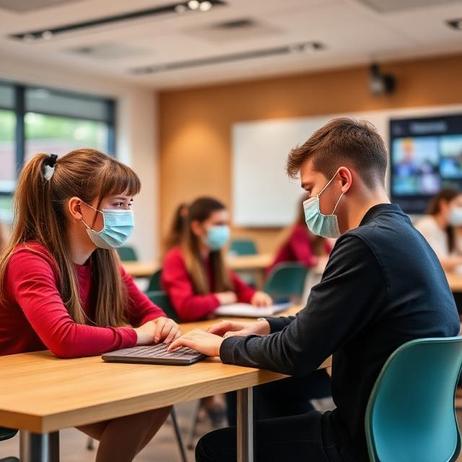
How Boarding Schools Are Adapting Post-Pandemic in 2026

Updated
|
How Boarding Schools Are Adapting Post-Pandemic in 2026
Explore how boarding schools are adapting to post-pandemic education in 2026, from hybrid learning to student wellness and campus innovation.

How Boarding Schools Are Adapting to Post-Pandemic Education

The conversation around how boarding schools are adapting to post-pandemic education has shifted significantly since 2020. What began as an emergency response has evolved into a long-term transformation of teaching, learning, and student life. In 2026, boarding schools are not simply recovering from disruption, they are redefining what a residential education looks like in a more flexible, health-conscious, and technology-driven world.

For families exploring options on Boarding School Review, understanding how boarding schools are adapting to post-pandemic education is essential. Today’s schools are blending academic rigor with resilience, prioritizing student well-being, and embracing innovation in ways that will shape the next generation of graduates.

A Shift Toward Hybrid and Flexible Learning

One of the most visible ways boarding schools are adapting to post-pandemic education is through hybrid learning models. While fully remote instruction is no longer the norm, the infrastructure built during the pandemic remains in place.

Many schools now offer:

  • Recorded lectures for review and reinforcement

  • Virtual office hours for additional academic support

  • Digital collaboration tools integrated into daily coursework

  • Contingency plans for temporary remote learning during disruptions

This flexibility benefits not only students who may face illness or travel constraints but also those who learn best at their own pace.

According to research from the U.S. Department of Education, schools that maintained blended learning environments saw improved student engagement and continuity during disruptions. Boarding schools have taken this insight further by embedding digital tools

. . .read more

How Boarding Schools Are Adapting to Climate Change

Updated
|
How Boarding Schools Are Adapting to Climate Change
How Boarding Schools Are Adapting to Climate Change: Resilient campuses, emergency planning, and 2026 sustainability strategies.

How Boarding Schools Are Adapting to Climate Change: Resilient Campuses & Emergency Planning is no longer a forward-looking conversation. It is an operational priority. From wildfire smoke in the West to hurricanes in the Southeast and flooding across New England, boarding schools must protect students who live on campus year-round. Unlike day schools, they function as small municipalities, responsible not only for academic continuity but also housing, dining, health services, and emergency response.

In 2026, climate resilience is as essential to a boarding school’s long-term strategy as academic excellence or college placement. Parents increasingly ask how campuses are preparing for extreme weather, managing energy costs, and safeguarding student health. Schools are responding with infrastructure upgrades, sophisticated emergency planning, and sustainability initiatives that double as educational opportunities.

Why Climate Adaptation Matters More at Boarding Schools

Boarding schools face unique exposure to climate-related risks:

  • Residential dormitories operate 24/7.

  • Students often travel internationally and may not be able to evacuate quickly.

  • Large campuses include historic buildings that may be vulnerable to flooding or heat stress.

  • Remote or rural locations can complicate emergency response.

According to the National Oceanic and Atmospheric Administration, the United States has experienced a sustained increase in billion-dollar weather disasters over the past decade. For schools with 300 to 800 students living on campus, preparedness is not optional. It is

. . .read more

Boarding School Summer Programs: Academic vs. Extras

Updated
|
Boarding School Summer Programs: Academic vs. Extras
A 2026 guide to boarding school summer programs, comparing academic enrichment with costly extras to help families invest wisely.

Each year, thousands of students enroll in boarding school summer programs hoping to gain academic momentum, explore new interests, or experience life on a residential campus. Yet as tuition for summer sessions continues to rise in 2026, families are asking an important question: Are these programs delivering genuine academic enrichment, or are they expensive add-ons with limited long-term value?

This guide to Boarding School Summer Programs: Academic Enrichment vs. Costly Extras breaks down what families need to know, how to evaluate program quality, and how to determine whether the investment aligns with your child’s educational goals.

The Growing Popularity of Boarding School Summer Programs

Summer offerings at boarding schools have evolved significantly over the past decade. What once centered primarily on enrichment camps now includes:

  • Intensive STEM research academies

  • Writing and humanities institutes

  • Global leadership seminars

  • College readiness boot camps

  • Arts conservatories

  • Competitive athletics training

According to national enrollment data from the National Center for Education Statistics, families are increasingly seeking structured summer learning opportunities to combat academic regression and enhance college readiness. While NCES tracks K-12 trends broadly, boarding schools report steady growth in summer participation, especially in competitive academic fields such as coding, engineering, and biomedical research.

In 2026, many boarding schools have expanded their summer footprints,

. . .read more

Boarding School Glossary: Key Terms for Families

Updated
|
Boarding School Glossary: Key Terms for Families
A comprehensive 2026 boarding school glossary explaining key terms, traditions, academics, and student life for parents and students.

Boarding School Glossary: A Parent’s Guide to the Language of Boarding Education

For families exploring boarding school options, the vocabulary alone can feel overwhelming. Terms like “Harkness,” “form dean,” “matriculation,” or “postgraduate year” are part of daily life on campus, but they may be unfamiliar to prospective students and parents.

This updated 2026 boarding school glossary clarifies the most common academic, residential, and extracurricular terminology used at independent boarding schools. Whether you are comparing programs, attending an admissions interview, or reviewing a school handbook, understanding this language will help you navigate the process with confidence.

If you are new to the process, you may also find it helpful to review our overview of What Is Boarding School? and How to Choose a Boarding School.

Academic Terms

Advanced Placement, AP

College-level courses developed by the College Board, culminating in standardized exams. Many boarding schools continue to offer AP classes, though some have shifted toward advanced, school-designed curricula that emphasize depth over standardized testing.

International Baccalaureate, IB

A globally recognized curriculum administered by the International Baccalaureate Organization. Some boarding schools offer the IB Diploma Programme, which emphasizes interdisciplinary learning, research, and global awareness.

Harkness Method

A student-centered discussion model in which students sit around an oval table and lead the conversation collaboratively. Originally developed at Phillips Exeter Academy, the method is now widely adopted across independent schools. Teachers act as facilitators rather than lecturers.

. . .read more

Recent Articles